
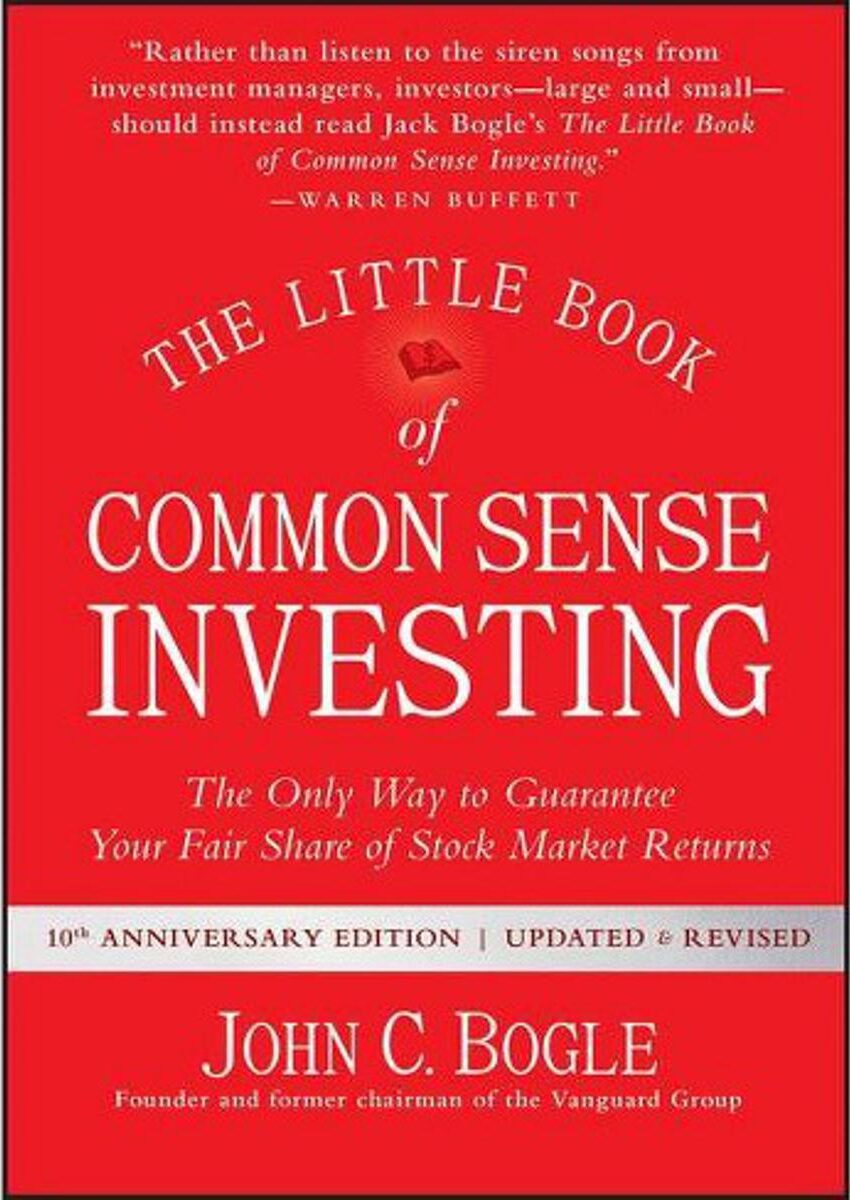
The Little Book of Common Sense Investing
*We may earn a small commission at no extra cost to you.
Book Summary
The Little Book of Common Sense Investing by John C. Bogle, founder of Vanguard, distills his decades of investing wisdom into a short, accessible guide focused on one central idea: low-cost index fund investing is the most reliable way for ordinary investors to capture their fair share of stock market returns.
Bogle explains why trying to beat the market through active fund management is largely a losing game once fees, taxes, and trading costs are accounted for. He walks readers through the mathematics of costs and compounding, showing how even small differences in expense ratios can have a massive impact on long-term wealth.
This updated 10th Anniversary Edition includes fresh data through 2016 along with two new chapters covering asset allocation and retirement investing, making the guidance more directly actionable for readers planning their own portfolios.
Unlike denser investing texts, this "Little Book" delivers its message in a concise, highly readable format, making it one of the most approachable entry points into index investing for beginners while still offering enough depth to be useful for experienced investors.
Endorsed by figures like Warren Buffett, the book has become a go-to recommendation for anyone looking for a simple, evidence-based approach to building long-term wealth in the stock market.
Key Lessons
Why You Should Read This Book
You should read The Little Book of Common Sense Investing if you want a short, clear explanation of why index investing works, without wading through a dense, technical text.
The book is especially valuable for beginner and intermediate investors who want a simple, evidence-backed strategy for long-term wealth building without needing to actively manage or pick individual stocks.
Famous Quote
Who Should Read It?
Our Summary
The Little Book of Common Sense Investing succeeds because it condenses John C. Bogle's core investing philosophy into a short, highly readable book without sacrificing the substance behind it. The clear explanations of cost and compounding make a compelling, data-backed case for indexing.
Because the book focuses so heavily on the case for index investing, readers looking for guidance on individual stock picking or more complex strategies won't find that here. But for its intended purpose, teaching why low-cost, passive investing works, it delivers with clarity and conviction.
Overall, it remains one of the best short introductions to index investing available and a natural companion to Bogle's longer works.
Our Rating: 9.4/10
Final Verdict
If you want a short, clear, and compelling case for low-cost index fund investing,
The Little Book of Common Sense Investing deserves a place on your investing bookshelf.